
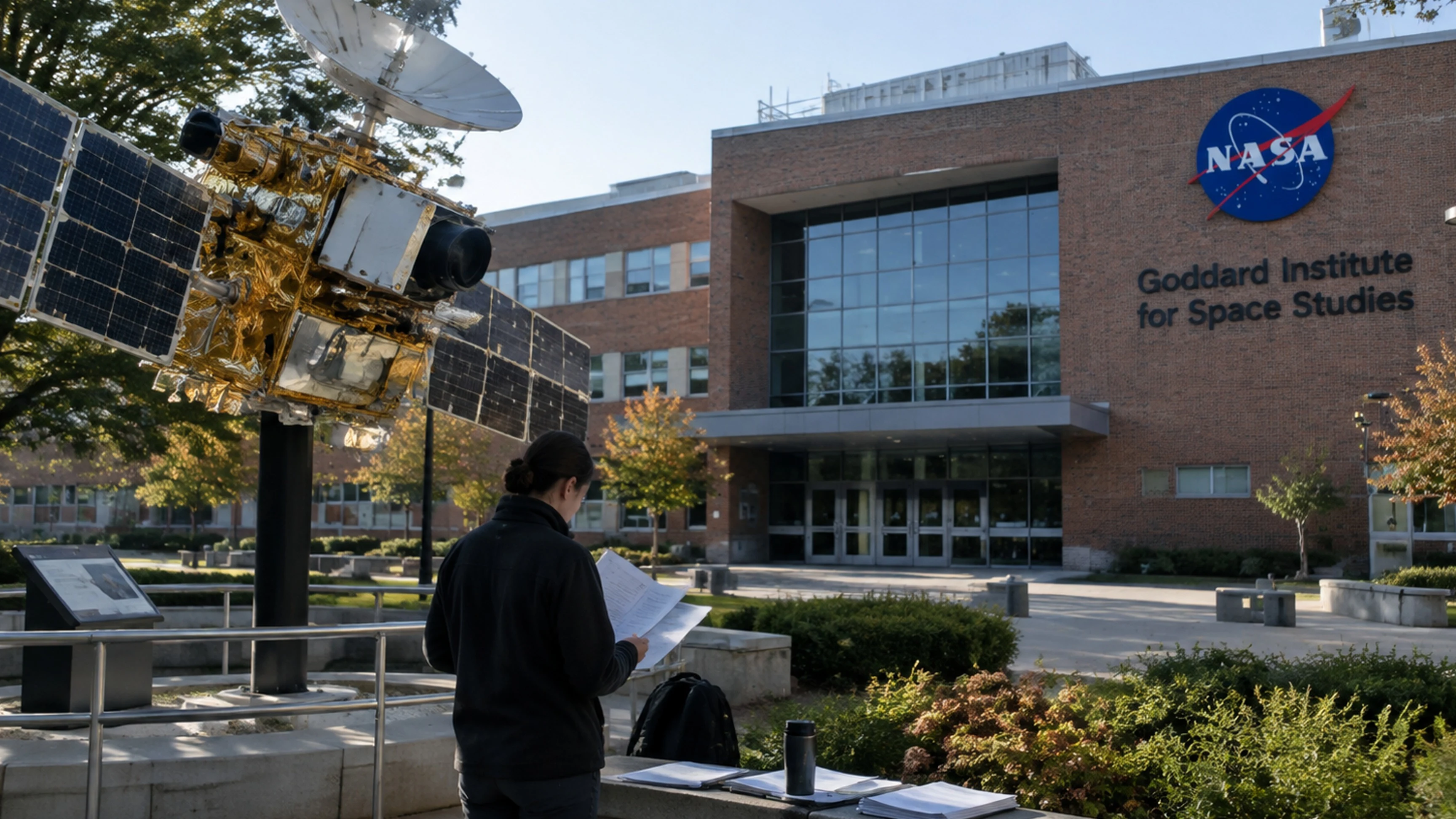



NASA October 2026 Temperature: Record 1.55°C Above Average
NASA put October 2026 at 1.55°C above its 1951 to 1980 average, the warmest October in a record from 1880. How the ten settled versus predictions compare.
versus Editorial · 10 November 2026
October 2026 was the warmest October in NASA's global temperature record, which starts in 1880: NASA's GISTEMP table, as we read it at 04:13 UK time on Saturday 14 November 2026, puts it 1.55°C above the 1951 to 1980 average, ahead of the previous record of 1.34°C shared by October 2023 and October 2024. All ten versus predictions on the October figure were settled on Thursday 12 November 2026, between 18:21 and 18:23 UK time (GMT).
This update is for readers in Great Britain. It reports a figure NASA has published and is not a forecast or advice.
What the updated table says
NASA's global land-ocean table prints each month as a whole number of hundredths of a degree and says to divide by 100, so the entry of 155 for October 2026 means 1.55°C. Its header now lists station and ocean records up to October 2026.
Our own ranking of the table's October column, run at 04:13 UK time on 14 November 2026, puts October 2026 first of the 147 Octobers from 1880 to 2026. The five warmest:
- 2026: 1.55°C
- 2023 and 2024: 1.34°C each
- 2025: 1.19°C
- 2015: 1.07°C
By our arithmetic that is a margin of 0.21°C over the old record (1.55 minus 1.34). July 2026 (1.24°C) and August 2026 (1.42°C) are also the warmest of their months in the table, while September 2026 (1.39°C) is second to September 2023 (1.48°C).
NASA's release dates schedule, as set on 30 January 2026, placed the October update at 11:00 am EST on Thursday 12 November, 16:00 UK time (GMT). None of the GISTEMP pages we checked says when the table went public, and the graphs page, rebuilt automatically each month, is marked as updated on 10 November, so we cannot confirm the exact posting time.
Where 1.55°C leaves the ten predictions
Every prediction names the source that settles it before you trade (see what market resolution means). All ten here take their answer from NASA's GISTEMP table; the two sets differ on what would have happened had NASA posted nothing by a cut-off.
Four questions about October's place
These asked whether October 2026 would rank first, second or third among all the Octobers in NASA's table, or fourth or lower. Under their rules a tie would have handed October 2026 the shared place, and without a NASA figure by 04:59:59 UK time (GMT) on Tuesday 1 December, 11:59:59 pm on 30 November in New York, other reliable sources in agreement would have decided. NASA's table has October 2026 alone in first place, so the tie rule never came into play. First is the place the hottest October page asked about; the other three asked about places October 2026 did not take.
Six bands for the size of the anomaly
These split the October value into below 1.30°C or unpublished, 1.30 to 1.34°C, 1.35 to 1.39°C, 1.40 to 1.44°C, 1.45 to 1.49°C and 1.50°C or more. The value counts to the nearest hundredth, each band takes in both its end points, only one band can be Yes, and the first value NASA posts is final for them even if NASA later revises it. Had NASA posted no October value by 04:59 UK time (GMT) on Wednesday 2 December, 11:59 pm on 1 December in New York, the lowest band would have taken the result, hence "or unpublished" in its title. Against those headlines, 1.55°C falls inside the 1.50°C or more range and outside the five lower ones.
How NASA builds the figure
GISTEMP, the analysis of NASA's Goddard Institute for Space Studies, combines NOAA's GHCN v4 weather station records with the ERSST v5 sea surface record, according to its home page, which says the tables are updated about the 10th of every month. Each value is an anomaly averaged over the planet: how far the surface was above or below normal, where normal is the 1951 to 1980 average for that place and time of year, as the GISTEMP FAQ explains.
Two points follow from the FAQ. The baseline is not pre-industrial: NASA suggests adding about 0.19°C (its estimate as of January 2025) to compare with 1850 to 1900. And each update can shift earlier months slightly, because of late reports, occasional corrections and the extra data feeding NOAA's and NASA's processing. This one did: when we read the table on 10 November, before the October update, it had September 2026 at 1.38°C and October 2025 at 1.18°C, against 1.39°C and 1.19°C now.
Copernicus reached the same verdict
The Copernicus Climate Change Service said on 5 November 2026 that October 2026 was the warmest October in its ERA5 data, 0.90°C above its 1991 to 2020 average and ahead of the previous October record, set in 2023 at 0.85°C (Copernicus October 2026 bulletin). It linked the month's record sea surface warmth partly to an intensifying El Niño (see our El Niño guide). ERA5 is a different dataset with a different baseline, so its numbers cannot be set against NASA's directly; it also names 2023 alone as the old October record, where NASA's table had 2023 and 2024 level.
What comes after October
- Wednesday 9 December 2026, 16:00 UK time (GMT): NASA's planned November update, 11:00 am EST in its schedule. On the current table, a November value above 1.40°C, the figure for November 2023, would be a record for the month. The update may also revise October 2026 slightly; the band pages' rules took the first October value NASA posted.
- NASA's analysis of 2026 as a whole: NASA has not published a date; its analysis of 2025 came out on 14 January 2026. It will show whether 2026 passes 2024 as the warmest year in NASA's record.
Before you trade
You can lose the whole amount you put into a position: a prediction that settles against your answer pays 0p. A transaction fee of 2% of the stake is added on top and shown before you confirm, and while a prediction is open you can sell at the current price. versus is licensed by the UK Gambling Commission under account 101143, shown on the Commission's public register. Safer Play offers deposit limits, loss limits, reality checks, time out and self exclusion alongside GAMSTOP.
Frequently asked questions
What was NASA's global temperature for October 2026?
1.55°C above the 1951 to 1980 average, in NASA's GISTEMP table as read at 04:13 UK time on 14 November 2026. The table prints it as 155, meaning hundredths of a degree.
Was October 2026 the hottest October on record?
In NASA's table, yes: first of 147 Octobers since 1880, ahead of 2023 and 2024 at 1.34°C each. Copernicus's ERA5 data also ranked it first, at 0.90°C above its 1991 to 2020 average (bulletin of 5 November 2026).
When will NASA publish the November 2026 figure?
NASA's release schedule plans it for Wednesday 9 December 2026 at 11:00 am EST, which is 16:00 UK time (GMT).
Is 2026 the hottest year on record?
Not known yet: 2026 is not over, and NASA has not published a date for its full-year analysis. NASA's table lists 2024 as the warmest year at 1.28°C; Copernicus ranked January to October 2026 second in ERA5, 0.07°C below the same months of 2024.
18+ only. Trade responsibly. BeGambleAware.org and GAMSTOP.
Predict the world’s next moves.
enter versus™More frompulse

Quito Mayoral Election 2026: Polling Day, UK Times and Predictions
20 November 2026

Louisiana House Runoffs 2026: Who Is on the 12 December Ballot
20 November 2026

How Many SpaceX Launches in 2026? November Count and Schedule
12 November 2026

Will 2026 Be the Hottest Year on Record? NASA's Numbers to October
14 November 2026

How Many Magnitude 7 Earthquakes in 2026? 13 by 14 November
14 November 2026

Starship Flight 16 Date: None Listed After Four Flights in 2026
15 November 2026